



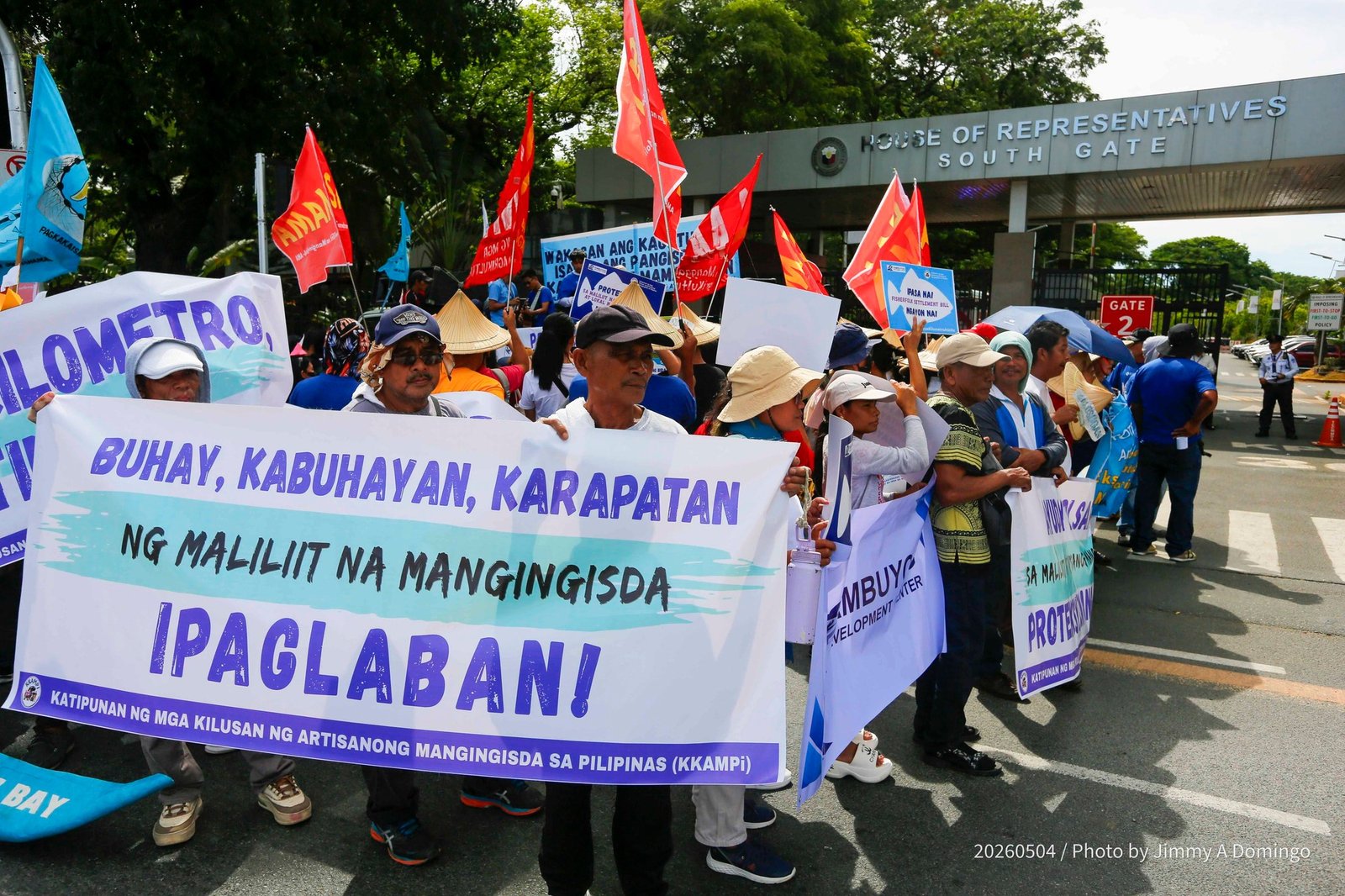
MANILA–Fisherfolk leaders under the Katipunan ng mga Kilusang Artisanong Mangingisda sa Pilipinas (KKAMPi), with the support of NGOs for Fisheries Reform (NFR) led by Tambuyog Development Center, Inc., lobbied for fisheries bills at the House of Representatives to demand urgent protection for small-scale and artisanal fishers, their communities, and the country’s municipal waters.
The group with 300 fisherfolk members of KKAMPi will march along Batasan Road toward the South Wing Gate of Congress to hold a program and deliver their urgent call.
Carrying the main call “PROTEKSYON SA MALILIIT NA MANGINGISDA AT LOKAL NA PANGISDAAN, NGAYON NA!”, the filing calls on Congress to act on the deepening crisis faced by municipal fisherfolk: poverty, displacement, commercial fishing encroachment, weak enforcement in municipal waters, climate disasters, coastal development pressures, and the continuing invisibility of women in fisheries.
For KKAMPi, the message is clear: small fishers do not need empty promises. They need laws that protect their homes, their fishing grounds, their livelihoods, and their right to participate in decisions affecting local fisheries.
Ka “Dodoy” Roberto Ballon, KKAMPi Chairperson, said the filing is a demand for justice, not charity.
“Hindi limos ang hinihingi ng maliliit na mangingisda. Ang hinihingi namin ay karapatan, proteksyon, at katarungan. Kung ang dagat ang bumubuhay sa bayan, dapat ang unang pinangangalagaan ay ang mangingisdang nagtataguyod nito.”
The proposed legislative package addresses three major concerns.
First is security of tenure for municipal fisherfolk and fishworkers within the 15-kilometer municipal waters. The proposed “Bida ang Mangingisdang Artisano sa Kinse Kilometro” Bill seeks to guarantee the exclusive rights of small-scale fisherfolk over the municipal waters, protect traditional fishing grounds, prevent unlawful displacement and commercial encroachment, and improve fisherfolk registration, municipal water zoning, co-management, and community participation in fisheries governance. It also recognizes women and youth as key partners in fisheries livelihoods and governance.
Second is stronger municipal fisheries governance. The proposed measure seeks to guarantee fisherfolk’s right to have access, manage, and protect marine resources within municipal waters (up to 15 km from the coastline) under the jurisdiction of local government units (LGUs). Thus, strengthen the authority of local government units over municipal waters, support science-based and inclusive governance, institutionalize local enforcement mechanisms, and establish support systems for conservation, fisherfolk protection, climate adaptation, and the fight against illegal, unreported, and unregulated fishing (IUUF).
Third is fisherfolk settlement and coastal security. The proposed fisherfolk settlement measure seeks to establish settlement areas near fishing grounds, provide security of tenure, protect fisherfolk communities from arbitrary displacement, promote climate-resilient coastal housing, and integrate livelihood facilities such as fish landing sites, gear repair spaces, post-harvest facilities, and basic social services.
Ka “Pabs” Pablo Rosales, President of PANGISDA-Pilipinas, a KKAMPi member organization, said Congress must confront the painful contradiction faced by fishing communities.
“Mayaman ang ating karagatan, pero naghihirap ang mangingisda. Iyan ang malaking kabalintunaan at kawalang-katarungan na dapat nang wakasan. Hindi sapat ang ayuda kung araw-araw namang nanganganib ang aming kabuhayan, tirahan, at karapatan sa pangisdaan.”
KKAMPi stressed that coastal homes are not separate from fisherfolk livelihoods. For fishing families, the shoreline is where boats are docked, gears are repaired, fish are landed, catch is processed, and community life is sustained. Relocation far from the sea means loss of livelihood, deeper poverty, and the breaking apart of coastal communities.
The proposed bills also give strong recognition to women in fisheries, whose work remains largely invisible despite their central role in fishing households and local fisheries economies. Women mend nets, prepare fishing gears, process and dry fish, sell catch, manage household economies, engage in gleaning, seaweed farming, organizing, and coastal resource protection.
Miriam Petalcorin of the Samahan ng Mangingisdang Kababaihan ng Macalelon said women must no longer be treated as invisible workers in the fisheries sector.
“Ang kababaihan sa pangisdaan ay hindi lang katuwang sa bahay. Kami ay nag-aayos ng lambat, nagpoproseso ng isda, nagtitinda, nag-aalaga ng pamilya, at nakikibaka para sa pangisdaan at kabuhayan. Kung kikilalanin ang mangingisda, dapat kilalanin din ang kababaihang bumubuhay sa pangisdaan.”
KKAMPi said genuine development must not mean the displacement of fisherfolk, the destruction of coastal communities, or the surrender of municipal waters to commercial interests.
“Hindi kami tutol sa tunay na kaunlaran. Pero ang kaunlarang nagpapalayas sa mangingisda, sumisira sa baybayin, at ibinibigay ang dagat sa iilan ay hindi kaunlaran—ito ay pang-aagaw,” Ballon added.
The groups called on the 20th Congress to urgently pass laws that recognize small and artisanal fishers, including women and fishworkers, as rights-holders, food producers, coastal stewards, and central actors in protecting the country’s local fisheries.
Photo: Jimmy A. Domingo