



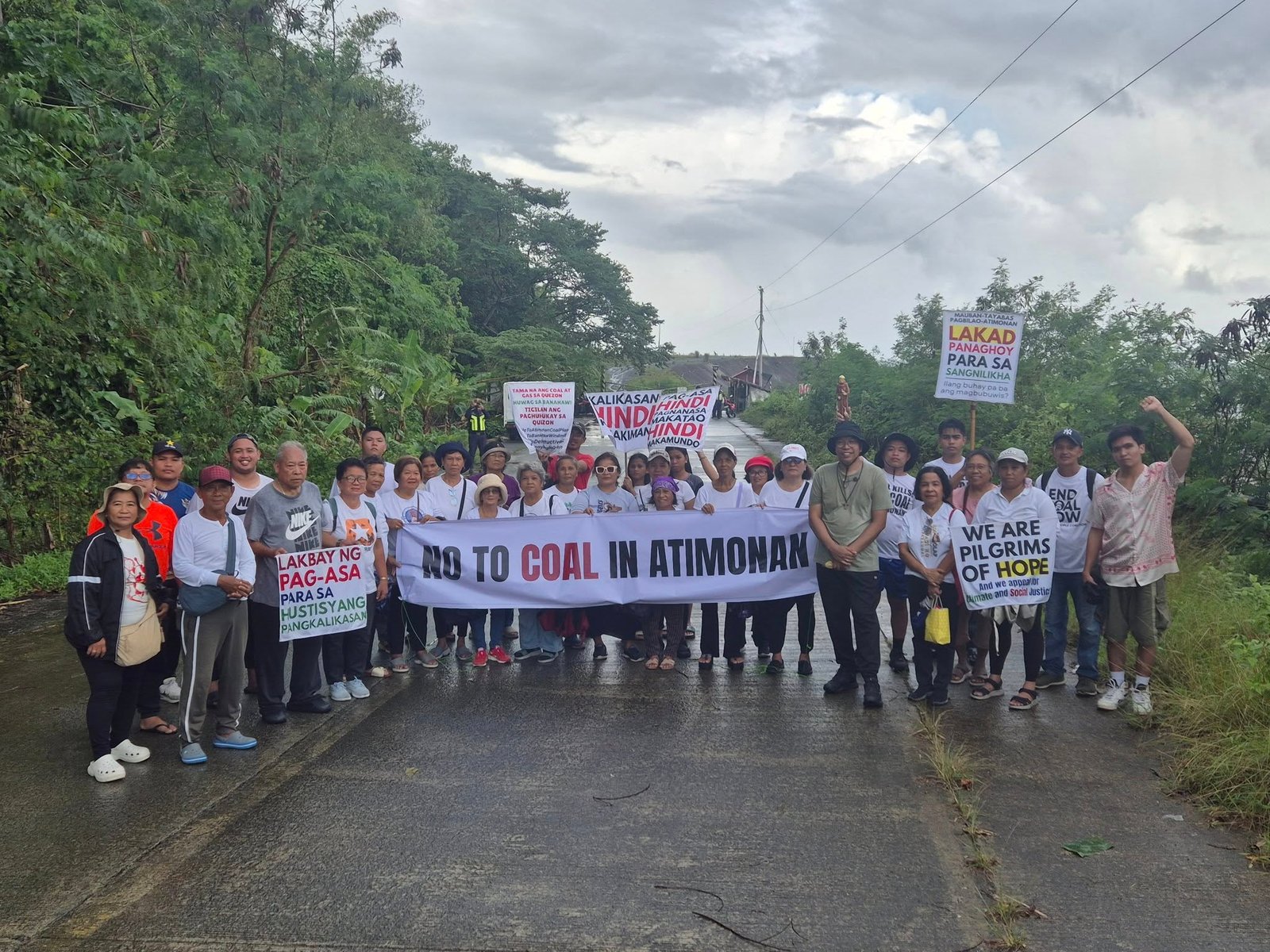
Church and green energy groups concluded their three-day pilgrimage across Quezon province by staging a rally at the Meralco PowerGen-owned (MGen) 1,200 MW coal-fired power plant in Atimonan to protest its operations and the expansion of fossil fuels in the Philippine power industry.
Led by Quezon for Environment (QUEEN), a coalition of ecological protection and church-led groups, the participants stressed that the provincial governor, Gov. Angelina Tan, and the mayors of the province’s municipalities must heed the people’s calls for ending the rebirth of coal and preventing ecologically-damaging operations in Quezon.
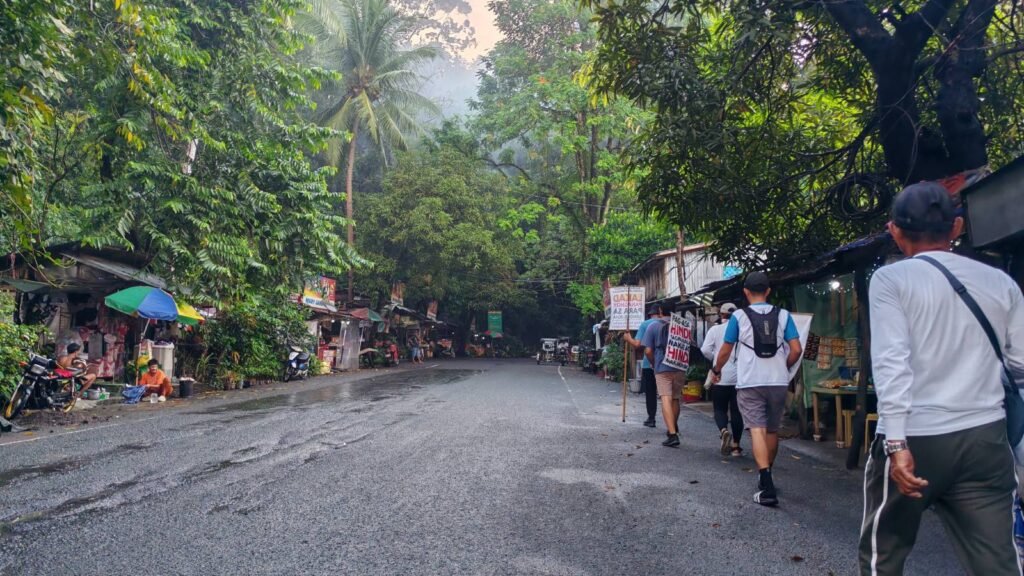
“With every stop from Mauban, Tayabas City and Pagbilao all the way to Atimonan, our humble pilgrimage was welcomed by communities and churches alike, with active participation and support from priests and residents signifying that Quezon is against the presence and the use of coal in its lands,” said Fr. Warren Puno of the Diocese of Lucena and Caritas Philippines.

“We must end fossil fuel expansion, which promises only destruction and loss of life. President Marcos Jr. and the Department of Energy’s decision to revive coal serves only to intensify the climate crisis, of which our communities are the most vulnerable. The lives taken and the barangays ruined by Typhoon Tino and Super Typhoon Uwan are proof. The national government approved the operations of MGen’s Atimonan coal plant and gutted the coal moratorium, despite decades-long local opposition in Quezon and coal’s contributions to the climate crisis, proving that Energy Secretary Sharon Garin and President Marcos Jr. are favoring corporate gain while endangering our communities,” said Gerry Arances, convenor of the Power for People Coalition.
The 3-day pilgrimage likewise demand for the halt to destructive and extractive operations in the province, including quarrying and the proposed construction of a 247 MW wind power project along the base of Mt. Banahaw.
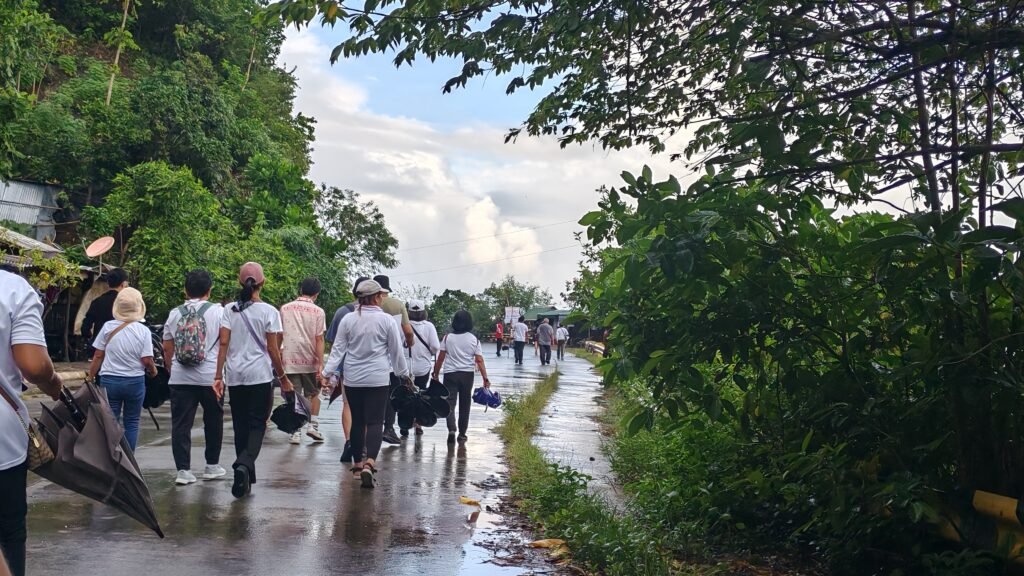
“The base of Mt. Banahaw, which we regard as sacred and protected land, is at risk of destruction at the hands of a proposed wind power project by Ayala. We support the greener and safer future that renewable energy will deliver, but we must not endanger local wildlife and ecology for the energy transition. The construction of renewable energy must not compromise the safety and security of our communities and our environment. For the sake of ecological protection, we demand that all renewable energy projects be people-centered and sensitive to our local ecosystems,” said Fr. Puno.

“Quarrying puts entire communities at risk of polluted water sources, respiratory issues, and potential flooding or landslides; likewise, local wildlife stand to lose their habitats to such destructive operations,” said Fr. Puno. “Such operations actively endanger its host communities and surrounding environment, therefore we must work towards mitigating their destructive impacts.”
Continuing a decade-long resistance from Quezon’s communities against the Atimonan coal plant, QUEEN and its local allies persevere to advance genuine and safe renewable energy.

“Sa bawat planta ng coal na ipinatatayo, ang mga komunidad ang nagdurusa,” said Ka Ramon Grimaldo, a fisherfolk leader in Atimonan and President of the Sagip Karagatan. “Pangako ng fossil fuels ang mga operasyong nakasisira sa dalampasigan, nakamamatay na polusyon para sa mga buhay dagat, at pagpapalakas ng krisis sa klima. Tutol kami sa mga pangakong ito, at tuloy ang laban namin hanggang ligtas na renewable energy ang nagpapatakbo sa mga ilaw ng Quezon.”
“Renewable energy is the solution to our country’s energy woes, both by decreasing our emissions that worsen the climate crisis and making electricity more affordable. However, our shift to renewable energy must be just and humane – at its center must be the people and the ecological systems we seek to protect,” said Fr. Puno.