



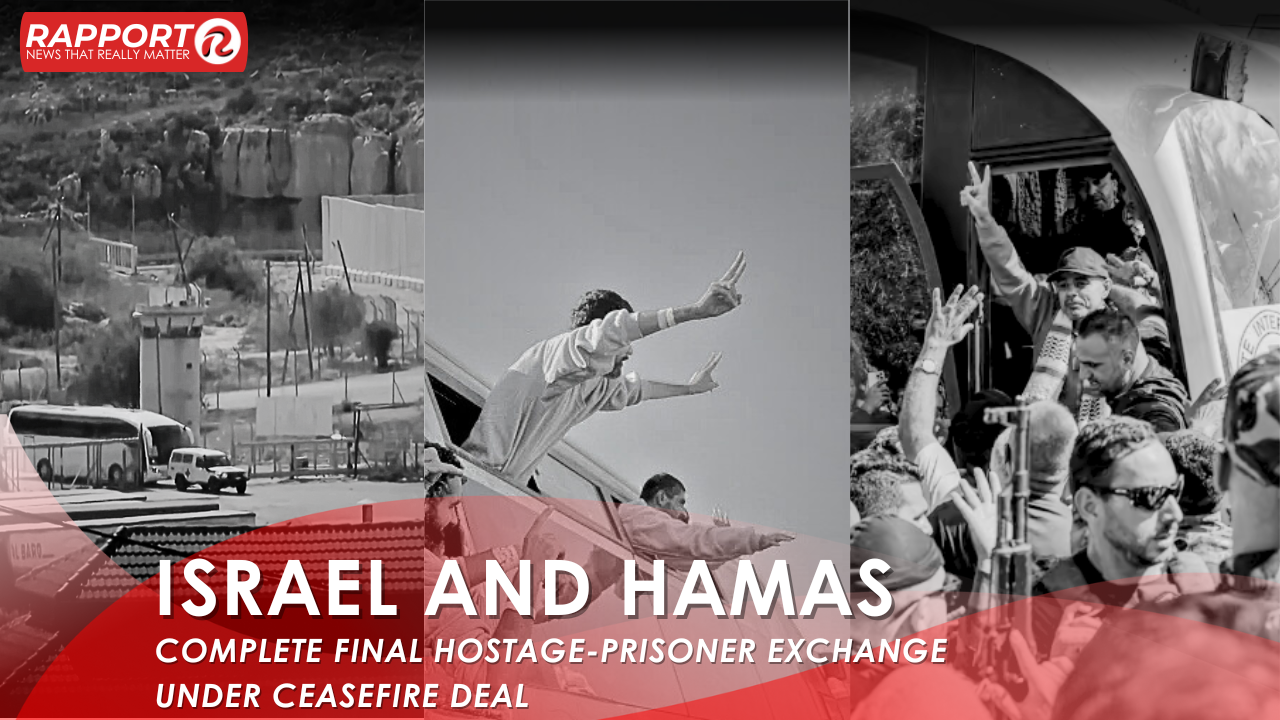
In a major development marking what officials described as the final phase of the ceasefire and hostage exchange agreement, Hamas has released the last 20 living hostages abducted during the October 7, 2023 attacks. In return, Israel freed nearly 2,000 Palestinian prisoners, concluding one of the largest and most contentious exchanges since the conflict began.
The Final Release
According to reports from Reuters, the 20 hostages—comprising Israeli nationals and foreign citizens—were freed late Friday under international supervision. The group included both civilians and soldiers who had been held in Gaza for over two years.

Their release fulfills a key term of the current ceasefire and humanitarian agreement mediated by Egypt, Qatar, and the United States. The move follows weeks of indirect negotiations aimed at ending the prolonged captivity of Israeli citizens and stabilizing the fragile truce.
Israel Frees Nearly 2,000 Palestinian Prisoners

In exchange, Israel released between 1,900 and 2,000 Palestinian prisoners, Reuters reported. Among those freed were approximately 250 inmates serving life sentences for serious offenses, and around 1,700 detainees who had been arrested since the 2023 war—many of them held without formal charges.

AP News confirmed that 154 of the long-term prisoners were deported to Egypt, where they will be resettled in third countries under an international arrangement. Meanwhile, about 88 prisoners were transferred to the West Bank, and the majority returned to Gaza, where scenes of emotional reunions unfolded despite the continuing humanitarian crisis.
A Fragile Hope for Peace
International mediators have praised the completion of the exchange as a humanitarian breakthrough. However, regional observers note that hundreds of hostages were killed or remain unaccounted for, and thousands of Palestinians are still detained under Israeli security laws.

As families reunite and aid convoys move into Gaza, world leaders are urging both parties to build on this fragile moment. Whether this final exchange becomes a turning point toward peace—or merely a pause before renewed conflict—remains uncertain.