
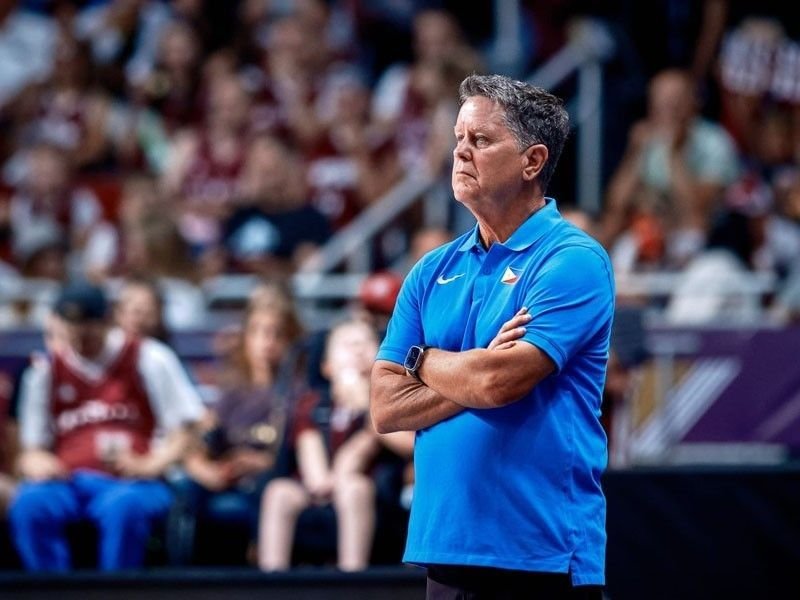
The Philippine men's basketball team, known as Gilas Pilipinas, recently struggled at the Aichi-Nagoya Asian Games, finishing in a disappointing ninth place. Coach Tim Cone pointed out that a significant factor in this result was the absence of some of the country's top players, who were unavailable due to commitments with their respective teams in Japan and Korea. Key players such as Dwight Ramos, AJ Edu, Quentin Millora-Brown, Kai Sotto, Mike Phillips, Carl Tamayo, and Kevin Quiambao were unable to participate, which negatively impacted the team's performance.
Another crucial concern during the competition was the lack of naturalized players. At the previous Asian Games in 2022, Gilas had standout performances from Justin Brownlee and Ange Kouame. Brownlee notably averaged 22.1 points and was pivotal in helping the team perform well. However, during the recent games, neither Brownlee nor Kouame could join the squad due to illness and contractual obligations, respectively. Additionally, other naturalization processes, such as that of Bennie Boatwright, had not been completed in time, and Malick Diouf was not included in the initial roster submitted for the event.
Prior to the Asian Games, the Philippines had a subpar showing at the 2022 FIBA World Cup, finishing 24th out of 32 teams. This performance was regarded as a low point, especially compared to teams like China and Iran, which ranked lower. Only four players who participated in the World Cup were also present in the Asian Games line-up. Notably, Brownlee's absence from the World Cup was strategic; he was preserved for the Asian Games due to FIBA rules relating to the number of naturalized players allowed.
The lead-up to the Asian Games was also not promising for Gilas. They played two preparatory matches in Korea, losing both by significant margins. This lack of competitive readiness carried over into the games in Nagoya, where Gilas struggled to find a rhythm. The youthful roster included seven first-time senior players, which contributed to their challenges on the court.
Gilas faced Bahrain first, losing narrowly despite a strong performance from local player Mustafa Rashed. The team then managed a win against Kazakhstan but ended on a low note with a heavy loss to China, which sealed their fate and confirmed their exit from contention.
Questions remain about the roster's composition. Many key players were unavailable due to injuries or recovery from previous commitments, raising concerns about the management decisions leading into the tournament. Sotto's situation was particularly noteworthy, as he was yet to sign with a team in the B-League and thus could not play.
Overall, Gilas Pilipinas faced considerable hurdles throughout the tournament. The absence of experienced and top-performing players, coupled with a roster lacking depth and size, spelled trouble. This experience serves as a stark reminder of the complexities of assembling a competitive squad for international events. Coach Cone's team gave their best effort under the circumstances, but the situation has sparked discussions about the need for better planning and preparation in the future.