



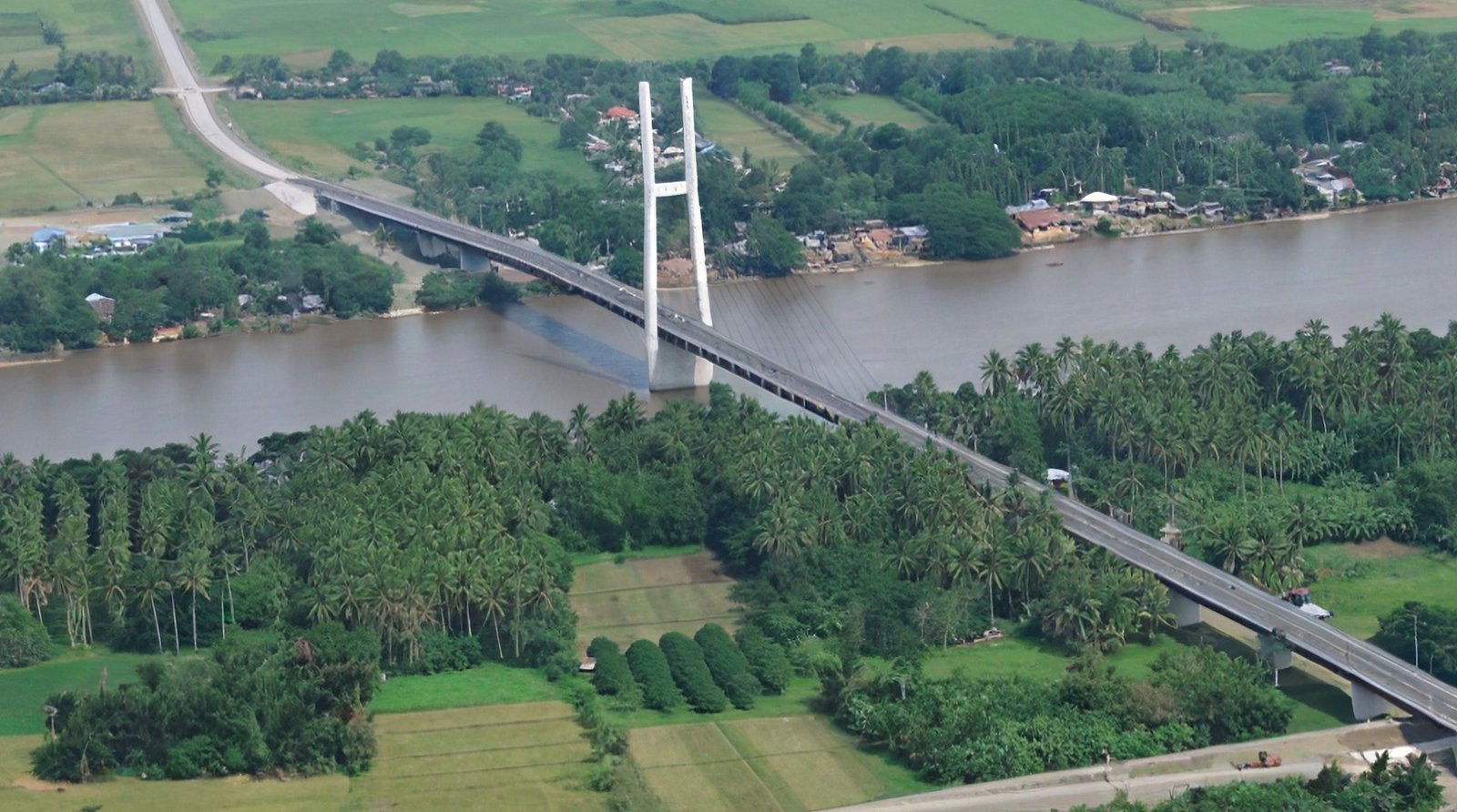
The Diosdado Macapagal Bridge, also known as the Macapagal Bridge, is an important structure in Butuan City, Mindanao. This bridge is not a suspension bridge but a cable-stayed bridge, which means it is supported by cables attached to tall towers. It stretches across the Agusan River, one of the longest and most important rivers in Mindanao.

With a total length of 908 meters (2,979 feet), the Macapagal Bridge holds a special place in the country’s infrastructure. It is the second-longest bridge in Mindanao and also the third-longest cable-stayed bridge in the Philippines. These records make it a symbol of progress not only for Butuan City but also for the whole Caraga region.

The bridge was built to help improve transportation in the city and nearby areas. Before it was constructed, vehicles had to pass through the old Magsaysay Bridge, which often became crowded. The Macapagal Bridge now serves as an alternate route, easing traffic and making travel faster and safer. It also supports the movement of goods and services, which boosts local trade and business.

Aside from its practical use, the Macapagal Bridge is also admired for its design. Its tall towers and strong cables make it stand out as a modern landmark in Butuan City. At night, the bridge lights up beautifully, adding charm to the cityscape and attracting both locals and visitors.
Named after former Philippine President Diosdado Macapagal, the bridge is not just a structure but also a reminder of development and progress in Mindanao. Today, it continues to serve thousands of travelers daily, linking communities and supporting economic growth in the region.
The Diosdado Macapagal Bridge is truly a symbol of connection—uniting people, places, and opportunities in Mindanao.