



Earlier this month, a deadly Russian drone strike hit the Shostka train station in northeastern Ukraine, killing a 71-year-old man and injuring at least eight others. This was one of the most recent attacks on Ukraine’s important railway infrastructure. The attack set train cars on fire, twisted them with explosions, and left them full of shrapnel.
Ukrainian officials say that these attacks are part of a larger Russian campaign to destroy important infrastructure, which will make it harder for both businesses and the military to move goods. Long-range drone technology has made the attacks more accurate. For example, Shahed drones now have video feeds on board that let them target in real time.
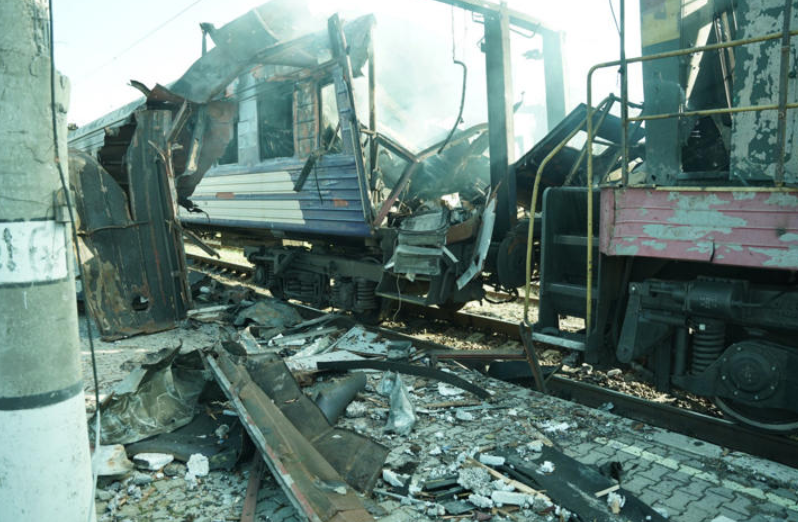
Two drones hit commuter trains in quick succession during the Shostka attack, which happened less than 70 kilometers from the Russian border. According to Oleksandr Pertsovskyi, the head of Ukraine’s railways, Russia’s tactics have changed to focus on hitting specific locomotives. This shows a shift toward more strategic, high-precision strikes.
It’s not just the number of enemy forces that matters; it’s also how they act. “Now that they have very precise Shahed drones, they are going after specific locomotives,” Pertsovskyi said.

Ukrainian railway workers have been praised for their resilience and quick repairs, which have kept trains running under a lot of pressure, even after being attacked many times. Officials, on the other hand, say that the rising number of attacks, along with Russia’s better targeting abilities, make Ukraine’s transportation network more and more vulnerable.
Since Russia’s full-scale invasion began in early 2022, Ukrainian railways have been attacked about once a week on average. But since the middle of summer this year, the number of attacks has gone up to two or three a week, according to an Associated Press review. Deputy Prime Minister Oleksii Kuleba said that there have been more than 300 attacks on rail infrastructure since August, which is about ten attacks per week.
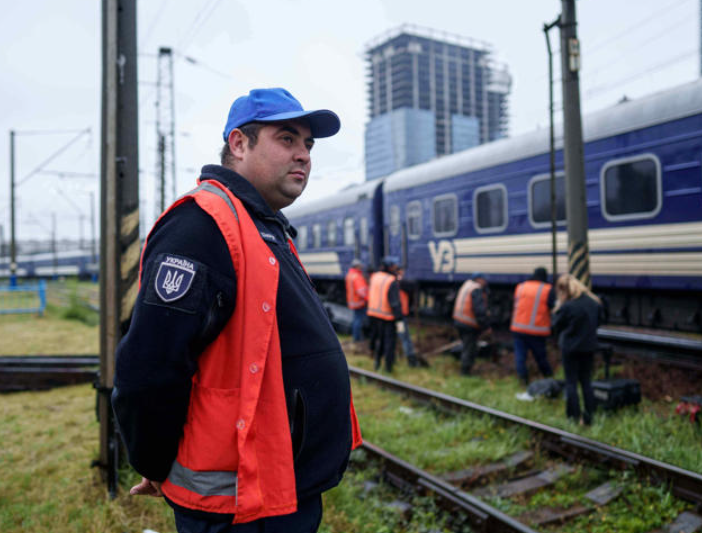
The State Statistics Service says that Ukraine’s rail system is important for both the economy and defense. It moves more than 63% of freight and 37% of passengers. It is very important for getting grain and metal exports to ports and borders, as well as moving military aid from other countries.
As Russia steps up its attacks on Ukraine’s infrastructure, the strength of the country’s railway network remains a symbol of strength and a key part of the war strategy.