



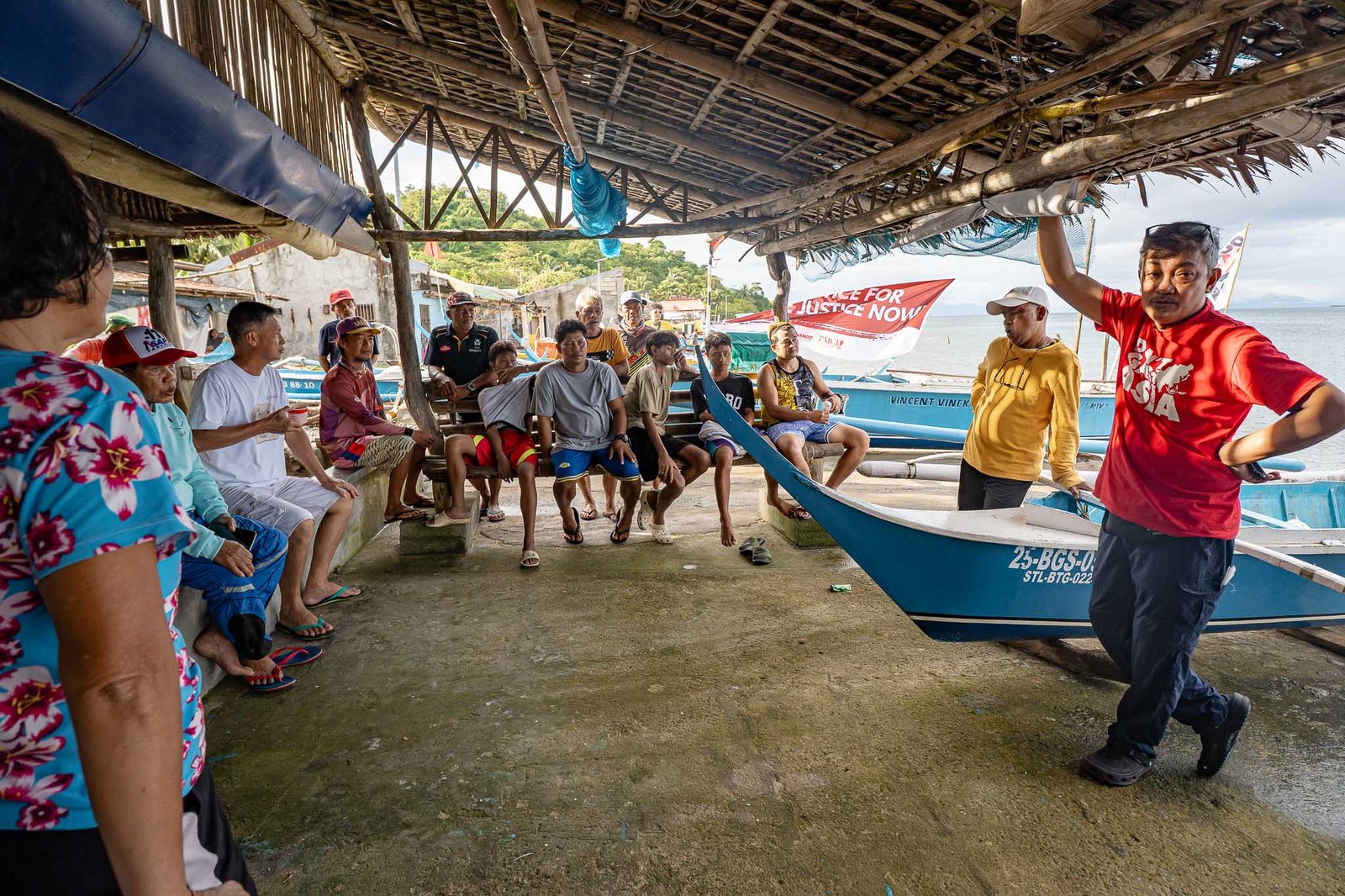
Residents in Batangas staged a fluvial protest in light of the recent campaign launch of “Don’t Gas the South,” calling on governments “to stop the massive gas build-out in the Global South that is undermining global climate goals.”
Known as the Philippines’ fossil gas hub, Batangas City hosts seven major operating fossil gas power plants with a combined capacity of approximately 4,610.5 megawatts (MW), one of the highest concentrations in the country, according to the groups.
“In the Philippines, the profit-seeking energy elites and their allies in the government insist on branding fossil gas as a transition fuel. This is nothing but a ploy to prolong the phaseout of fossil fuels through greenwashing to keep making more money from these dirty and deadly energy sources,”
said Ian Rivera, national coordinator of the Philippine Movement for Climate Justice (PMCJ).
“Fossil fuels cannot be used as a transition fuel. Not just because fossil gas is as dangerous and unreliable as coal, but also because the transition that should accompany its use has no sunset provision. It defies the climate goals through its business-as-usual profit motivation,” he said in a statement.
Leth Casao of Clean and Healthy Air for All Batangueños (CABATANG) said: “We have been steadfast in our fight for climate justice.”
“Our win against the BCE project strengthens our resolve to continue resisting environmentally degrading projects. There is hope in resistance. And we prove that to be true with every small win we gain from this. Living with this economy, system, and these killer projects is hard enough. But we endure for our children,” Casao added.
According to the groups, gas-fired power plants remain a significant source of greenhouse gas emissions, undermining the Philippines’ commitment to the Paris
Agreement and its goal to reduce carbon emissions by 75% by 2030.
The Philippines is also a signatory to the Global Methane Pledge which aims to reduce global methane emissions by at least 30% by 2030 compared to 2020 levels.
Citing recent data, the groups said that Asia accounts for the largest share of the planned gas build-out, hosting 104 newly discovered and in-development gas fields, 530 planned gas power plants, 300 proposed gas pipelines for construction, and 84 planned LNG import and export terminals.
“The transition fuel narrative on fossil gas is a sham and a weak attempt to greenwash fossil fuel to protect profits. Although we are in a desperate situation where time is a resource, we are moving too fast to a complete climate catastrophe; there are real solutions to the problem of emissions, not just fossil fuels dressed in green,” Rivera said.
“We need to radically change the systems that are responsible for disasters and calamities that wipe out our communities and allow politicians and elites to profit from our death and destruction,” he added.
Photo by PMCJ