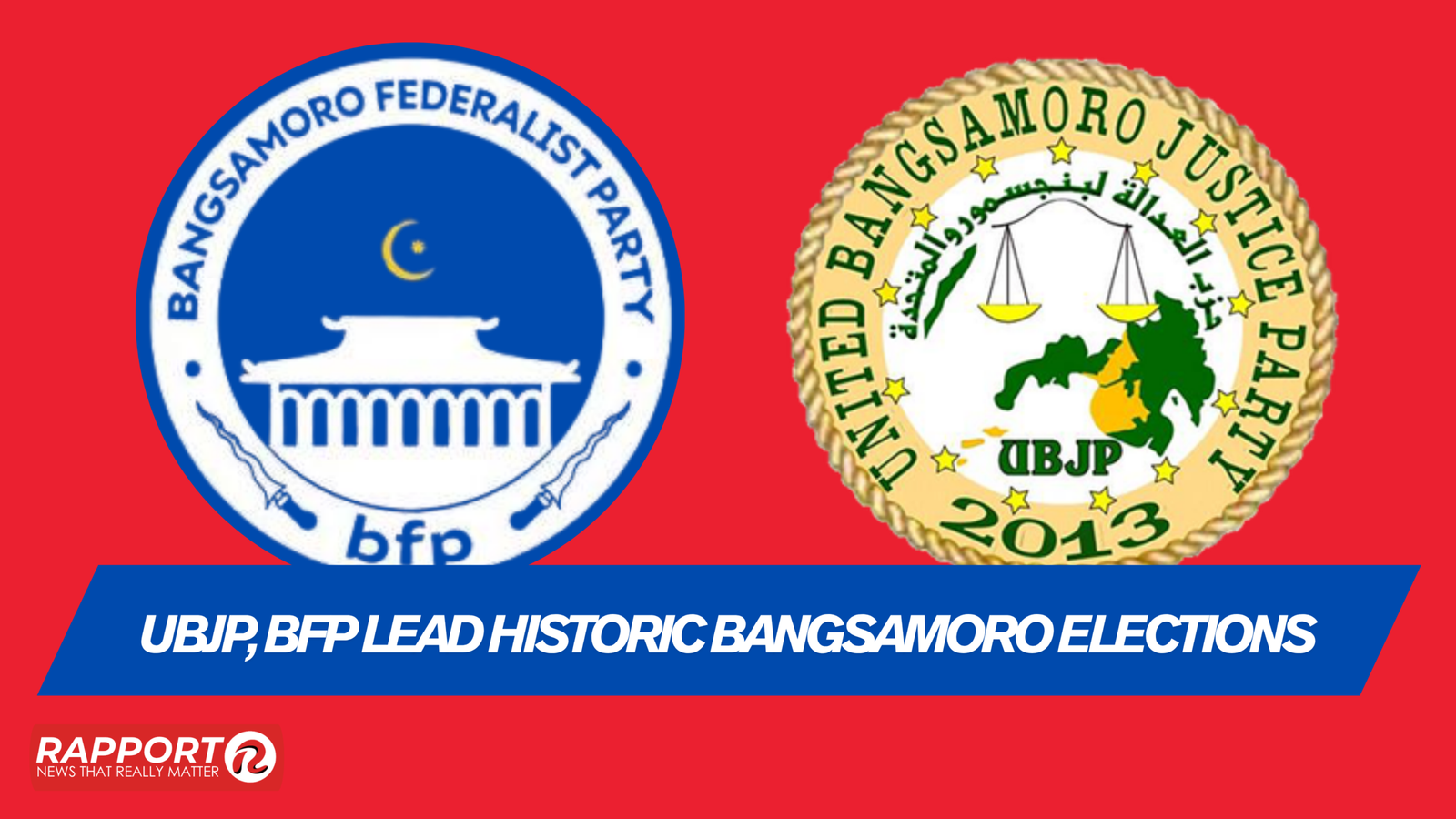


Unofficial results from the Commission on Elections show the two political parties founded by former Moro Islamic Liberation Front (MILF) commanders are now the top contenders for seats in the Bangsamoro Autonomous Region’s 80-seat Parliament. Monday’s vote was a milestone in the region’s transition from armed conflict to elected self-rule.
The two main groups, the United Bangsamoro Justice Party (UBJP) and the Bangsamoro Federalist Party (BFP), are led by men who once fought side by side but now compete for political power. The UBJP is led by MILF chairman Ahod “Al Haj Murad” Ebrahim, while the BFP is headed by Abdulraof Macacua, the region’s interim chief minister and former commander of the MILF’s military wing.
There are two ways in which seats in the Parliament are filled. 40 seats are allocated to party nominees according to their share of the vote and 40 seats are filled by direct election. Two of the direct seats are reserved for non-Moro indigenous groups and were already filled in August by a tribal assembly. On Monday, the other 38 direct seats were up for grabs.
By Tuesday afternoon, with nearly 99 percent of votes counted, UBJP had taken all six seats reserved for sectoral groups. But official results were still on hold due to a problem in Maluso, Basilan where dozens of ballots were found pre-marked even before voting started. Officials halted voting there, which affected more than 16,000 voters and may have altered how party seats are ultimately allocated.
In the vote-share race, BFP led with just above 35 percent, followed by UBJP with around 32 percent, the BARMM Grand Coalition (BGC) with about 21 percent and the Bangsamoro People’s (Raayat) Democratic Party with less than 4 percent. All four met the minimum to claim party seats, giving BFP 16 nominee seats, UBJP 15, BGC eight and Raayat one.
Early returns in the directly elected district seats show BFP leading with 15 out of 32 seats, UBJP with nine, a group called Serbisyong Inklusibo-Alyansang Progresibo with six, and two smaller parties sharing the rest.
In the aggregate, BFP is set to win 30 seats overall, with UBJP at 29 – both below the 41 needed for outright control. That means the party that wants to run the regional government will have to strike deals with smaller factions, possibly including the nine-seat BGC or six-seat SIAP, that could end up as kingmakers.
UBJP spokesman Mohajirin Ali said Tuesday the party had no plans yet to seek a coalition.
Meanwhile, parties affiliated with the rival Moro National Liberation Front, another former rebel group, did badly this election. Miriam Coronel-Ferrer, who once negotiated peace deals for the government, praised these smaller parties for even competing, saying she hoped all sides would remain honest, win or lose, as the region moves toward better governance. She said the newer parties had to take on a well-funded, nationally backed rival and powerful family political dynasties, especially in Lanao del Sur.
Ferrer said she was encouraged to see younger, newer candidates entering Bangsamoro politics through party platforms rather than personal followings, calling it a sign that old power structures are loosening when she spoke with reporters.
A coalition of civil society groups monitoring the polls, Duyog Bangsamoro, urged the incoming Parliament to respect the Comprehensive Agreement on the Bangsamoro and keep the peace process with the MILF moving forward no matter who wins. Former peace adviser Teresita Quintos Deles echoed that call, saying the agreement must be implemented no matter what happens in the elections.
Early estimates put the number of women in the new Parliament at only about 12, or about 15 percent of the chamber.
After winning a district seat in Maguindanao del Norte, Macacua called for unity among Bangsamoro leaders, saying the election may be over, but the real work is just beginning.
On security and complaints, the Integrated Bar of the Philippines said it received no formal complaints during the vote, though its president, Allan Panolong, admitted that some voters may have just been afraid to speak up. He said election officials were able to quickly stop voting in Maluso once the tampered ballots were discovered. Comelec Chair George Garcia said the commission already has an idea who was behind the incident and will take action once officials are back in Manila.
Panolong said the Cotabato City violence that left at least four dead and about 20 injured did not prevent voting elsewhere and defended the heavy police presence as necessary for public safety.
The election was a success overall, Malacañang said. Though the president had ordered close monitoring after the violent incidents, presidential spokesperson Claire Castro said police assessed the vote as generally peaceful.
UBJP, BFP Lead Historic Bangsamoro Elections