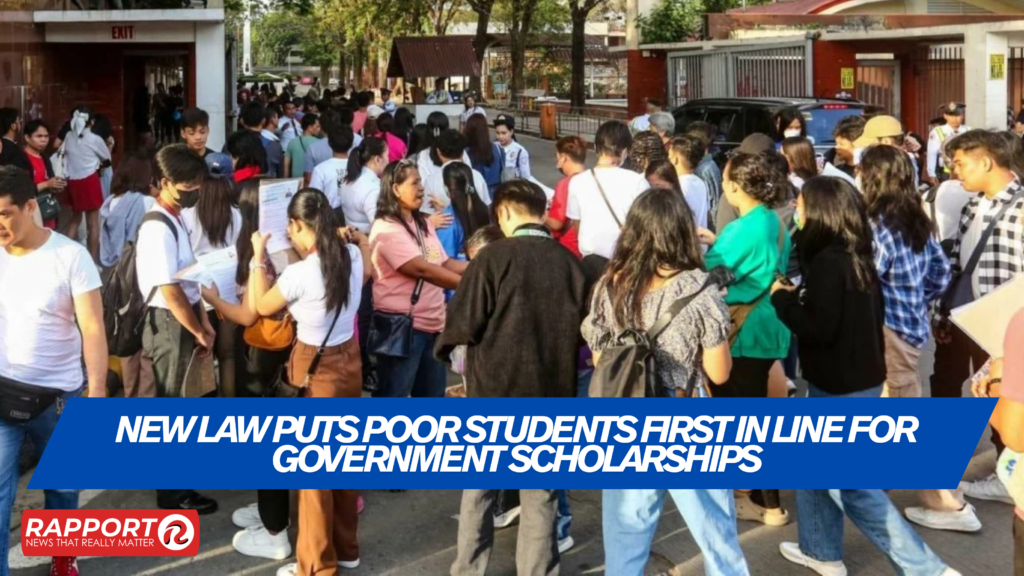
New guidelines now guarantee that the poorest college and vocational students will have priority on government financial support. President Ferdinand Marcos Jr. on Friday, September 4, signed Republic Act 12325 into law. The law amends the prior Universal Access to Quality Tertiary Education Act, providing extra support slots for students from the poorest backgrounds.
The shift follows research that revealed government aid was flowing away from the pupils who needed it most. The Second Congressional Commission on Education concluded that the share of subsidies flowing to the poorest households fell drastically, from 74% in 2018 to just 31% in 2022. Lawmakers stated this happened although the program was meant to help underprivileged students initially.
The new law fixes this by creating a defined order of priority for the Tertiary Education Subsidy. Now, students from families that are members of the Pantawid Pamilyang Pilipino Program or the government’s cash help program for poor households would be first in line. Then other students will be ranked by their family income.
“The goal is simple: make sure the help reaches the students who truly need it, especially those from poor families,” Marcos added. He signed the bill in a ceremony at Malacañang.
Also, the law establishes a brand-new support program called Private Education Assistance. This will allow impoverished students who are not currently on other grants, but who are studying priority courses, to study at recognized private colleges or technical schools.
The amount of money students get is another big difference. In the past, all students received the same fixed amount; approximately P27,000 per year for private schools and P20,000 for public institutions. Therefore, many students had to choose from only a few popular subjects such as business, education or computer technology. Under the new law, the amount of the subsidy will rely instead on the actual course taken. There will be more financing for students taking courses identified by the government as priorities.
The subsidy will now cover expenditures that students in health-related courses like nursing used to pay out of their pockets, including fees for internships and clinical training.
Marcos has ordered three organizations to draft rules for implementing the bill to effect these changes. The agencies are the Commission on Higher Education, the Technical Education and Skills Development Authority and the UniFAST student aid agency.
The legislation was authored by Representatives Roman Romulo and Jude Acidre, and Senators Bam Aquino, Joel Villanueva and Loren Legarda. It had been included as one of the administration’s priority bills.
This subsidy program is only one portion of the original 2017 law that made tuition free in state institutions and universities. That law also repealed fees for technical-vocational training and established up a student loan program, aside from the subsidies.