
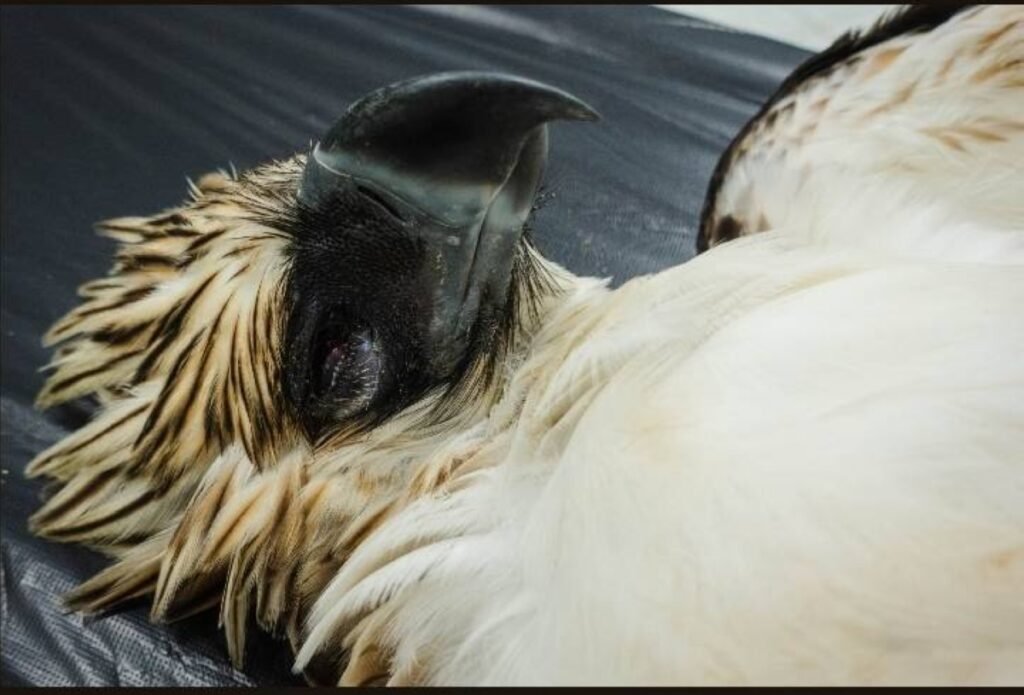
Recent incidents have raised alarm among conservationists in the Philippines after two young female Philippine eagles were found dead due to electrocution within just three days. The first eagle was discovered on October 1, near an electrical post in Barangay Guinalaban, Salay, Misamis Oriental, showing clear burn marks on its feet and characterized by post-mortem findings indicating electrocution as the likely cause of death.
Tragically, a second eagle was found dead on October 4 in Barangay Libertad, Arakan, North Cotabato. A veterinary examination confirmed electrocution as the cause, amplifying concerns particularly because this area is in close proximity to a known nesting site at Mt. Mahuson, where conservation efforts have been ongoing since 1995. The Philippine Eagle Foundation has confirmed at least six successful nesting attempts in this location, indicating its significance for the species' survival.
Dr. Jayson Ibanez, the operations director at the Philippine Eagle Foundation, emphasized the urgency of the situation. He advocates for immediate actions by authorities and power companies to mitigate electrical hazards that threaten these majestic birds. He suggested a collaborative approach involving engineers, electric cooperatives, government agencies, and local communities to identify and address risky areas before further losses occur.
Young Philippine eagles may be particularly vulnerable as they begin to leave their parental territories. Their movements often take them through risky areas such as forest edges, agricultural lands, and alongside roads where power lines can serve as precarious perches, increasing their chances of electrocution. Unfortunately, a history of similar incidents in Arakan has been documented since at least 2018. One young eagle died after interacting with energized wires of a 220-volt powerline, prompting the Philippine Eagle Foundation to partner with local electric cooperatives to enhance power line safety around eagle habitats.
In recent years, conservation partners have made strides in upgrading electrical infrastructure to reduce risks. Between 2023 and 2025, progress was made on a planned retrofit of 4.5 kilometers of power lines around Mt. Sinaka in North Cotabato, with three kilometers completed to date. However, efforts need to be amplified and prioritized to ensure more electrical poles are made safer for wildlife.
To further these efforts, the Philippine Eagle Foundation has called for the mapping of power lines in relation to eagle nesting and movement areas. They advocate for prioritizing hazardous poles that need immediate retrofitting and encouraging wildlife-safe designs in upcoming powerline projects.